A practical, step-by-step guide to creating finding your market and your customers
Wait - you DID validate right? You must validate. If you haven't yet, go back to Guide 2 to ensure you've found the market for your business idea.
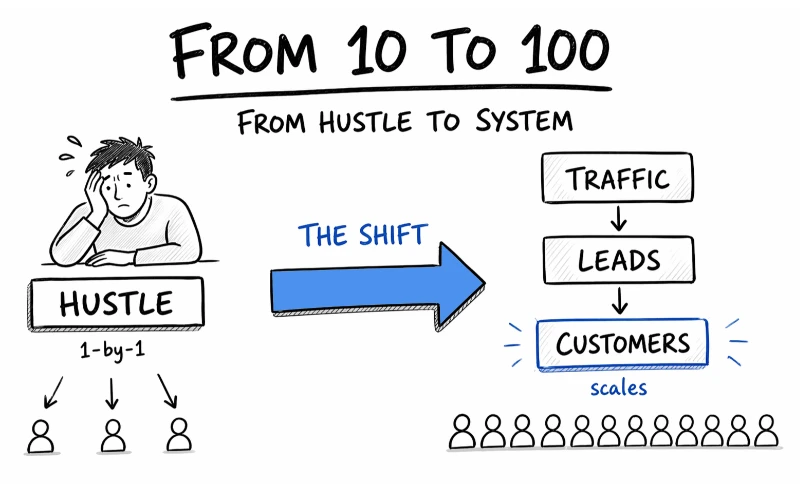
You've proven people want what you're selling. Maybe you've got a few customers, or even 10-20 customers. But you're stuck.
Every new customer feels like climbing a mountain. You need a system that scales beyond your personal network.
Here's the truth: What got you to 10 customers won't get you to 100. Early customers came from friends and hustle. The next 90 require marketing systems that work whether you're awake or asleep.
This guide is about making that shift.
Use your network, direct outreach, and personal conversations to land your first paying customers in 30 days.
Your first customers won't come from marketing systems. They'll come from hustle.
Before you worry about ads, SEO, or content marketing, you need to prove real people will pay you real money. That happens through direct, personal, often uncomfortable outreach.
Don't overthink it. Keep it simple and direct:
"Hey [Name], I'm launching [product/service] that helps [target customer] [solve problem]. Based on our conversation, I thought you might be interested. Would you be open to a quick call to see if it's a fit?"
Don't wait for perfection. Launch with a "good enough" MVP. Your first customers want results, not polish.
Don't hide behind your website. Direct conversations convert better than landing pages at this stage.
Don't skip the ask. Many founders talk about their product but never actually ask for the sale. Ask.
Your First 10 Customer Plan
1. List 20 people in your network who fit your customer profile:
2. Which 3 communities do your customers spend time in?
3. What's your "founding member" offer?
4. When will you start outreach?
Goal: Get 5-10 paying customers in the next 30 days through direct outreach.
Replace manual hustle with automated marketing systems that generate customers whether you're working or sleeping.
The shift from 10 to 100 customers requires systems:
Traffic × Conversion Rate = Customers
If 1,000 people visit your site and 2% buy, you get 20 customers. Improve conversion to 4%, you get 40 customers. Double traffic to 2,000 at 4% = 80 customers.
This is how you scale. Track numbers. Test. Improve what's working. Kill what's not.
Your Current Marketing Math
1. How many people saw your offer last month?
2. How many took action?
3. How many became paying customers?
4. What's your conversion rate? %
They spread themselves too thin. They try every channel at once: Instagram, TikTok, LinkedIn, Google Ads, Facebook Ads, SEO, email, podcasts, YouTube.
They post sporadically. They burn out. They give up after two weeks.
Here's the truth: Marketing works. But only if you commit.
Pick 2 channels. Go deep for 90 days.
The biggest mistake: quitting too early. Commit to 90 days minimum.
Stop talking about your company and start speaking directly to the transformation your customer gets from buying.
Bad: "We're a next-generation AI-powered platform revolutionizing collaboration."
Good: "Cut your team's meeting time in half and get projects done faster."
Stop talking about yourself. Start talking about what the customer gets.
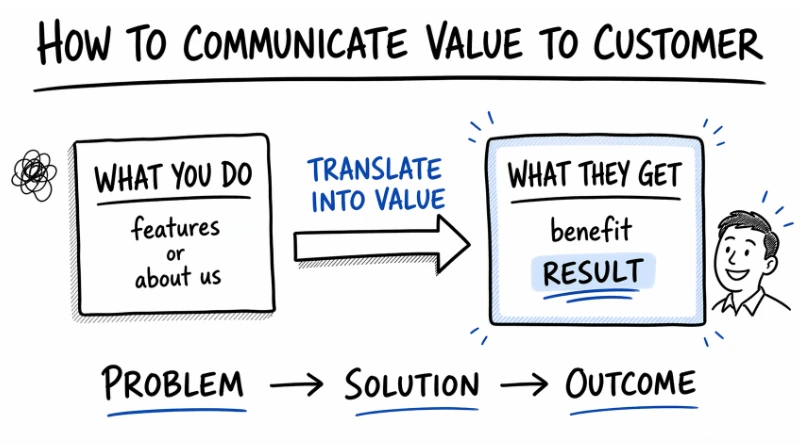
1. What pain point do you solve?
2. How do you solve it?
3. What's the outcome?
Read customer reviews, Reddit threads, support emails. Mirror their language back to them. When they see their own words reflected, it feels like you're reading their mind.
You have 7 seconds (or less!) to tell visitors what you do, who it's for, and why they should care—don't waste it.
Answer the questions your customers are already asking and build trust that turns into sales over time.
Content marketing = Creating valuable content that attracts and educates your target customer.
1. SEO Content: Blog posts optimized to rank on Google. Targets keywords your customers search for. Drives long-term organic traffic.
2. Social Content: Short posts, videos, stories on social platforms. Builds awareness and engagement.
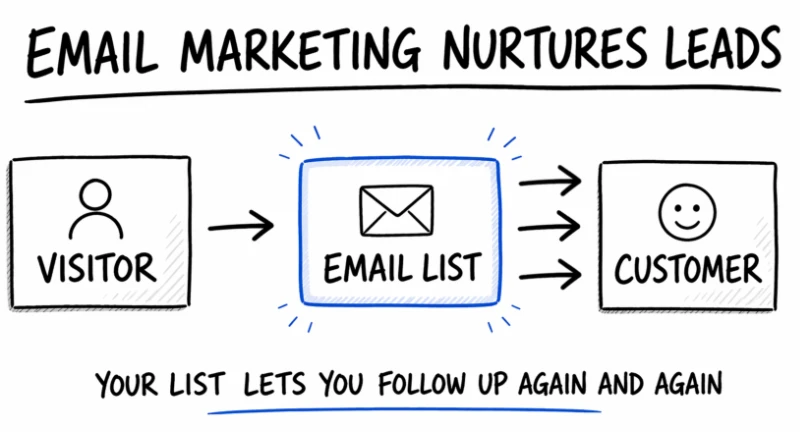
3. Email Content: Newsletters, tips, stories sent to your list. Nurtures relationships and drives sales.
Post consistently: 1-2x per week minimum. Content compounds over time.
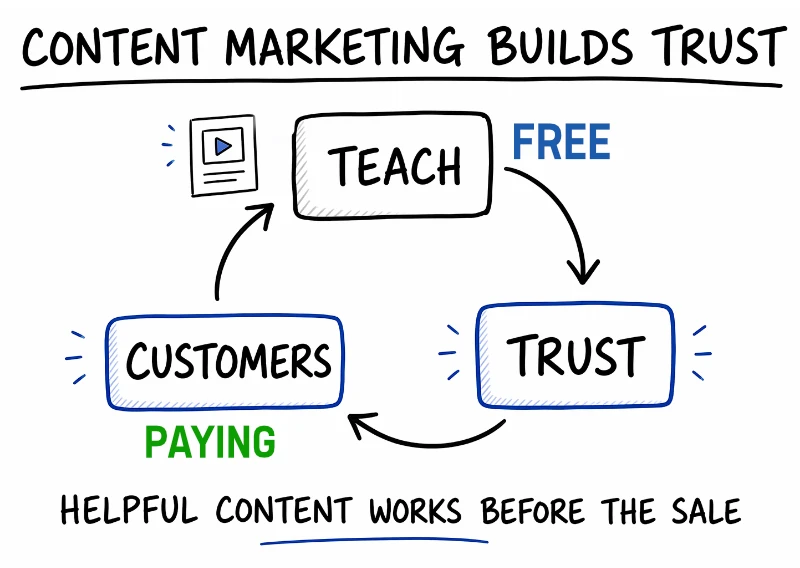
Pick one platform, post consistently for 90 days, and focus on engagement over follower count to drive real customers.
Pick ONE platform. Post daily for 90 days before judging results.
80% value, 20% promotion.
Build an email list with lead magnets and nurture subscribers into paying customers on autopilot.
Email has the highest ROI of any marketing channel: $42 return for every $1 spent.
Welcome sequence: 3-5 automated emails for new subscribers introducing your brand and building trust.
Weekly newsletter: Tips, stories, updates. Keep subscribers engaged.
Promotional emails: Sales, launches, special offers. Send strategically.
Send consistently: 1-2x per week, month or quarter minimum (depending on your business). Don't go dark for more than a couple months.
Spend $200-$1,000 testing ads, track what converts, scale the winners, and kill the losers to get customers fast.
Google Ads: People actively searching for what you sell. High intent. More expensive. Best for services and high-ticket items.
Facebook/Instagram Ads: People scrolling, not actively searching. Lower intent but cheaper. Best for consumer products and visual brands.
Don't expect profitability in week 1. Give it 30-90 days of testing.
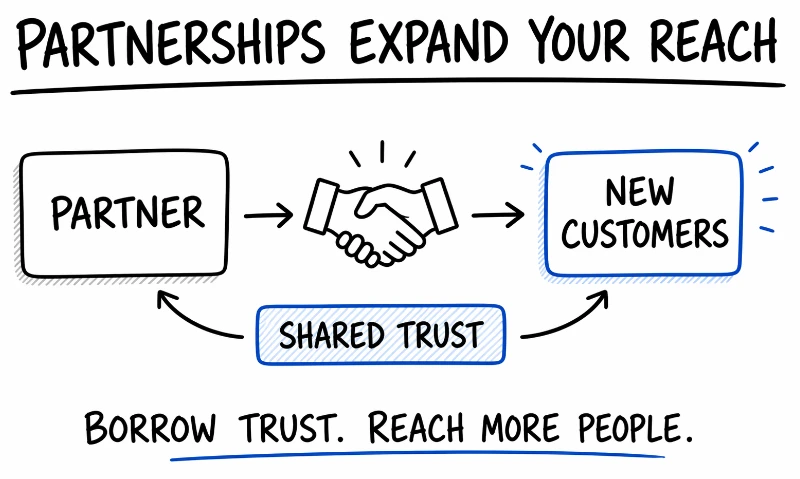
A good partnership must be a win-win. You both get something from it.
Find complementary businesses serving your customers and tap into their audience for instant credibility and dozens of new customers.
1. Referral Partners: Other businesses refer customers to you for a commission or reciprocal referrals.
2. Co-Marketing: Joint webinars, content, events with complementary businesses.
3. Affiliate Programs: Pay commissions for every customer an affiliate sends you.
One good partnership can bring you dozens of customers.
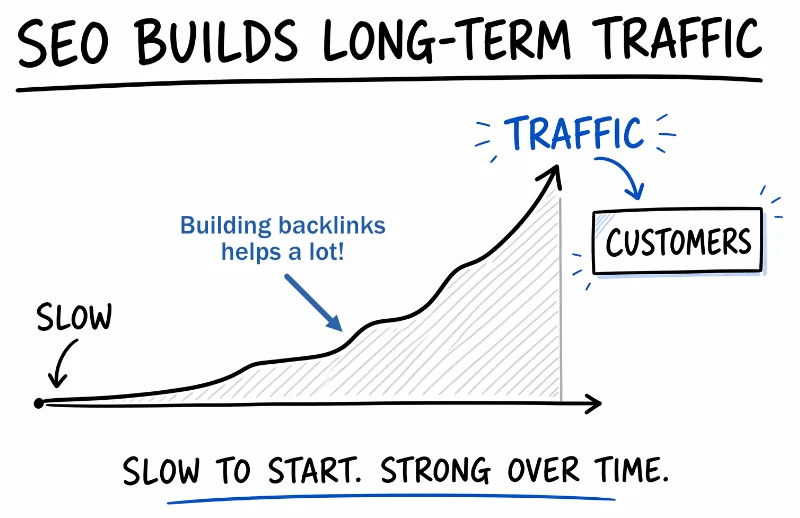
SEO is a long-game that can yield free traffic that compounds forever.
Here's the general plan: Publish 1,500+ word posts weekly, build backlinks, and answer questions people are asking.
Timeline: 12-18 months before meaningful organic traffic. Start now.
Pick one fast channel and one slow channel, commit to 90 days, and double down on what the data tells you works.
Pick 2 channels. Commit to 90 days. Track results. Double down on what works.
My primary channel:
Why:
My secondary channel:
Why:
90-day commitment starts:
For local businesses: Google Ads + Facebook Ads
For B2B services: LinkedIn + Email Marketing
For consumer products: Instagram + Paid Ads
For long-term growth: SEO + Content Marketing
Study YouTube heavily - there's are a ton of great info, tips, tutorials.
You now know:
The difference between 10 customers and 100 customers is systems. The difference between 100 and 1,000 is optimization.
Pick your 2 channels. Commit to 90 days. Track everything. Double down on what works.
Now go execute.
Want the Complete Marketing Playbook?
The full guide goes deep on every channel — with scripts, ad frameworks, and step-by-step strategies for each.
→ Read the Full Guide (complete deep-dive with worksheets and examples)
Complete guide series available at StartABusiness.Center
© 2026 StartABusiness.Center | All Rights Reserved
