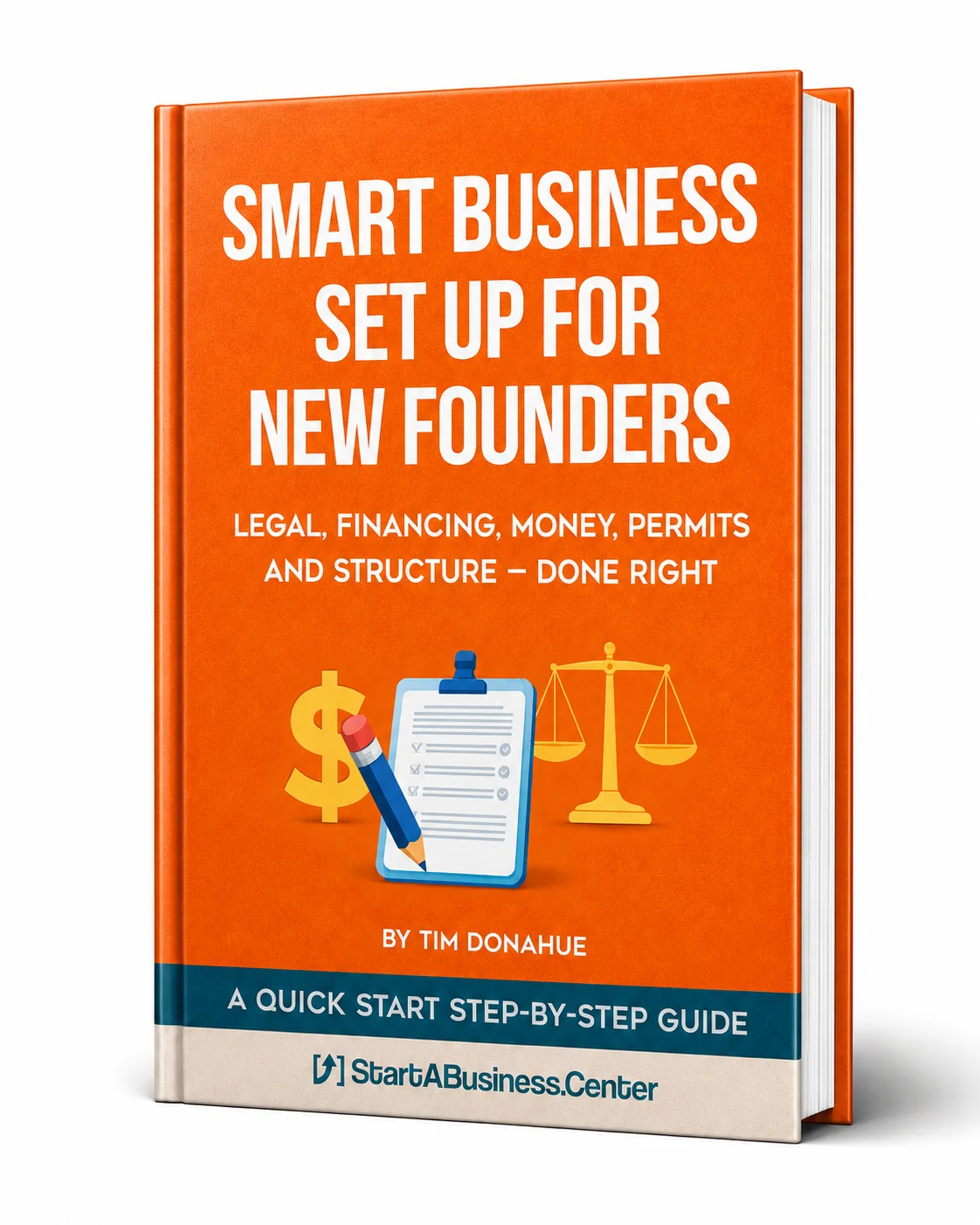
Smart Business Set Up For New Founders
A 5 Minute Assessment for Legal & Financial Setup
Get the legal and financial foundations right without overpaying or overcomplicating
Tim Donahue | StartABusiness.Center
You don't need to be a legal or financial expert to set up your business correctly. But you do need to make smart decisions that protect you and save money.
This quick assessment helps you avoid expensive mistakes while keeping things simple.
1. When Should You Formalize Your Business?
Most founders formalize too early. They rush to register an LLC before they've made a single sale.
The smarter approach: Start simple. Formalize when it makes sense.
You should formalize when:
- You're making consistent revenue (not just testing)
- You need liability protection (physical products, clients coming to your location)
- You're taking on a business partner
- You want to appear more credible to customers or investors
You can wait if:
- You're still validating your idea
- You haven't made your first sale yet
- You're running a low-risk service business from home
Starting as a sole proprietor costs nothing and lets you test without paperwork. You can always formalize later when it makes sense.
2. Which Business Structure Is Right for You?
When you're ready to formalize, you'll choose between a few main options:
Sole Proprietorship (Default)
- No paperwork, no fees
- Easy taxes (report on your personal return)
- But: No liability protection
LLC (Limited Liability Company)
- Protects your personal assets from business debts
- Simple taxes (still pass-through like sole prop)
- Costs $50-500 to set up depending on your state
- Best for most small businesses
S-Corp (or LLC taxed as S-Corp)
- Can save money on self-employment taxes
- Only worth it once you're making $60K+ profit
- More paperwork and accounting costs
What structure makes sense for you right now?
My business structure:
3. What Legal Stuff Do You Actually Need?
Don't let lawyers scare you into buying everything at once. Here's what actually matters:
Must Have:
- Business license (if your city requires it - call city hall)
- EIN (Employer ID Number) - free from the IRS, takes 5 minutes
- Business bank account (keeps your finances separate)
Need If Applicable:
- Sales tax permit (if selling physical products)
- Professional licenses (contractors, healthcare, food service, etc.)
- Home occupation permit (if working from home and having clients visit)
Can Add Later:
- Trademarks (protect your brand when you have traction)
- Contracts and terms of service (important, but you can start with templates)
- Insurance (get it once you have revenue or significant risk)
Call your local city hall and ask: "What do I need to legally operate a [your type of business]?" They'll tell you exactly what permits and licenses apply to you. Normally not expensive.
4. Is Your Pricing Strategy Profitable?
Most new founders underprice. They're afraid nobody will buy, so they charge too little and can't make a profit.
Your pricing must cover:
- Cost of delivering the product/service
- Your time (what you need to earn per hour)
- Business expenses (software, marketing, etc.)
- Taxes (set aside 25-30% of profit)
- Profit margin (at least 20-40%)
Quick profit check:
My price per sale: $
My cost per sale: $
Profit per sale: $
Sales needed per month to hit my income goal:
If the math doesn't work, you need to either raise prices, lower costs, or choose a different business model.
5. How Will You Fund Your Business?
Most small businesses don't need outside funding. The best funding source is revenue from customers.
Common Funding Options:
Bootstrapping (Use Your Own Money)
- No debt, no giving up equity
- Forces you to stay lean and profitable
- Best option for most service businesses and low-inventory products
Small Business Loan or Line of Credit
- Good for inventory, equipment, or expansion
- You'll need good credit and usually 1-2 years in business
- Be realistic about paying it back from revenue
Friends & Family
- Faster and easier than banks
- But: Can ruin relationships if things go wrong
- Always put agreements in writing
Credit Cards (Use Carefully)
- Fast access to cash
- High interest rates can sink you if revenue doesn't come fast
- Only use if you have a clear repayment plan
How much capital do you actually need to start?
Startup costs: $
Monthly operating costs: $
Funding source:
Setup Readiness Check
You're Ready to Formalize
- You've made sales and have proven demand
- You know which business structure fits your situation
- Your pricing is profitable (you've done the math)
- You have a realistic funding plan
Keep Testing First
- You haven't validated your idea yet
- You're not sure what to charge
- You don't know your costs yet
Get Help With
- Complex partnerships (hire a lawyer for operating agreements)
- High-risk industries (food, healthcare, construction)
- Tax strategy if making $60K+ profit (talk to a CPA about S-Corp election)
Your Next Action
Pick one setup action to complete this week:
- Call city hall to ask about required licenses/permits
- Get your free EIN from the IRS
- Open a business bank account
- Register your LLC if you're ready to formalize
- Calculate your true costs and adjust pricing if needed
Remember: Done is better than perfect. You can always upgrade your structure, add insurance, or file trademarks later. The goal is to start legally and protect yourself from the biggest risks—not to have everything perfect before you launch.
Want the Complete Setup Guide?
Get detailed walkthroughs for every legal and financial decision:
→ Read Quickie Guide (30-minute read with checklists)
→ Read Full Guide (Complete workbook with examples)
TIM DONAHUE - Entrepreneur / Mentor
StartABusiness.Center
