A practical guide to building systems, hiring, scaling revenue, and avoiding burnout as you grow
Congratulations. You did what most people only talk about—you started a business and got it off the ground!
You assessed your idea. You validated it. You set up legal foundations. You built a website. You found customers. You survived the startup phase.
And now you're standing at a new crossroads, facing a completely different set of challenges.
In the early days, scrappy worked. You wore every hat. You figured things out on the fly.
That got you here. But it won't get you there.
If you keep doing everything yourself, one of three things will happen: you'll hit a revenue ceiling, you'll burn out, or quality will fall apart.
The business now needs systems, processes, and leverage—the ability to run without you being the single point of failure.
Diagnose why you're stuck—fix your messaging first, then customer acquisition, talk to customers, audit your numbers, and raise prices.
If you're not growing yet, work through this checklist in order. Don't skip ahead.
This is the foundation. If your value proposition isn't crystal clear, all the traffic in the world won't convert.
Check:
Your customers will tell you exactly what messaging resonates and why you're not growing faster.
Ask them:
Now that messaging is solid, focus on driving traffic. This is the problem 90% of the time once messaging is dialed in.
Ask yourself:
Calculate these right now:
Red Flags:
Healthy:
Higher margins = can afford customer acquisition. Higher prices = fewer customers needed.
Test: Raise prices 20-30% for new customers. If you don't lose more than 20% of conversions, keep it.
Stop trying 10 things at mediocre level. Pick 2 channels. Commit to 90 days.
Most founders give up too soon. Your first ad campaign will probably fail. By #3-5, you'll learn what works.
Screen record your processes, write step-by-step instructions, and build a system anyone can follow without asking questions.
Systems = documented processes anyone can follow.
Start with tasks you do more than once per week:
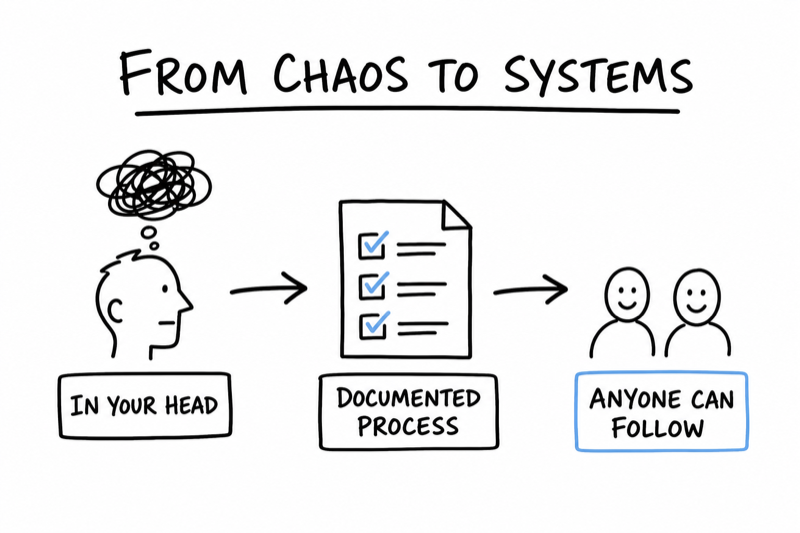
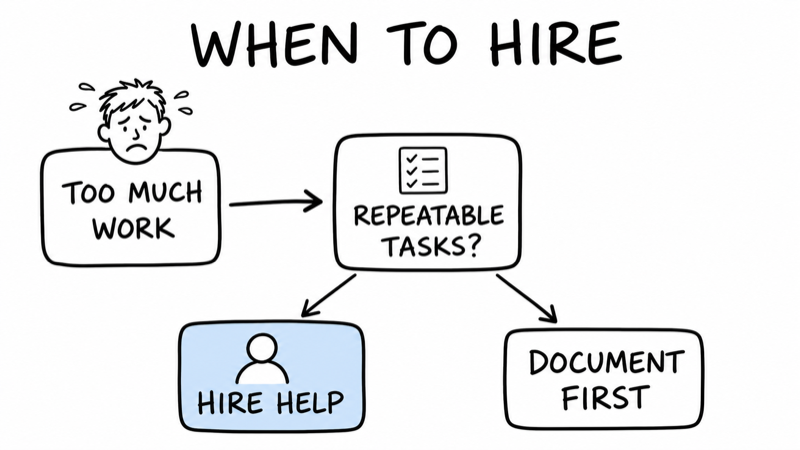
Hire when you're turning down revenue or spending 10+ hours weekly on repetitive tasks—start with contractors for tasks that drain your time.
Hire when:
Option 1: Hire for tasks that drain your time but don't require your expertise (admin, customer service, fulfillment).
Option 2: Hire for tasks that generate revenue but you're not good at (sales, marketing, business development).
Contractor: Part-time, project-based, you don't manage them closely. No benefits. Easier to start/stop.
Employee: Full-time or part-time, you manage them, you provide tools/training. Benefits required. Long-term commitment.
Start with contractors. Move to employees when you need consistent, dedicated help.
If your new hire isn't working out, let them go. Don't delay the inevitable. Give your new hire clear measurable directions. If they don't work out, let 'em go.
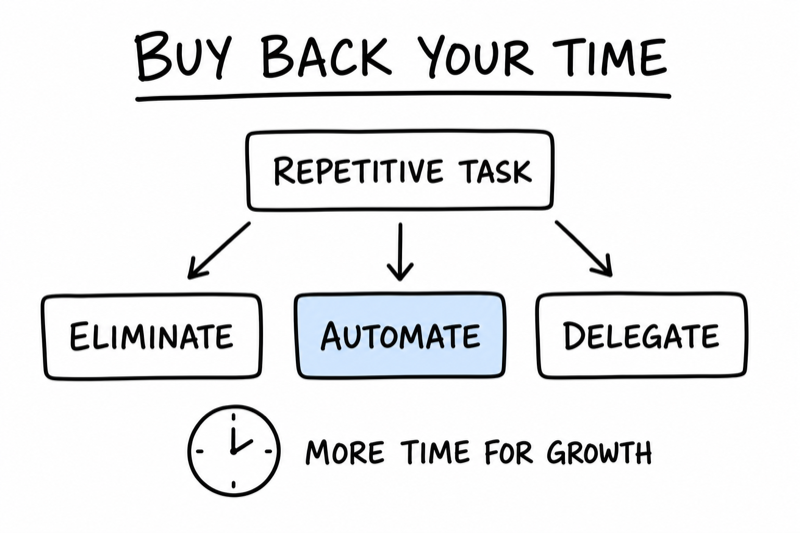
Use project management tools, CRM software, email automation, and Zapier to eliminate repetitive work and buy back your time.
Project Management: Asana, Trello, ClickUp (track tasks, deadlines)
CRM: HubSpot, Pipedrive (track customer relationships, sales pipeline)
Email Marketing: ConvertKit, Mailchimp (automate email sequences)
Scheduling: Calendly (let people book meetings without back-and-forth)
Accounting: QuickBooks, Wave, FreshBooks (track income/expenses)
Automation: Zapier (connect tools and automate workflows)
Document everything, delegate repetitive tasks, train people to decide without you, and build systems that run themselves.
Level 1: You do everything. (Where you are now)
Level 2: Others do tasks, you oversee. (Documented processes, trained team)
Level 3: Systems run themselves. (Automation, managers manage, you focus on strategy)
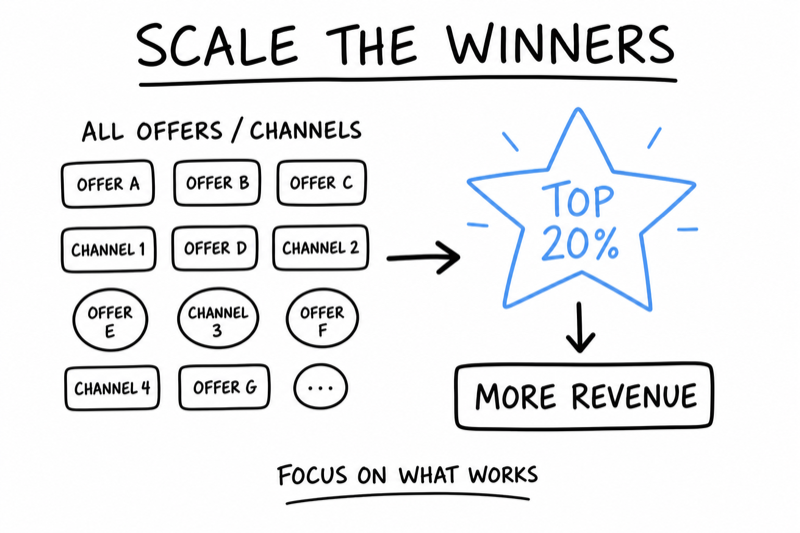
Find your highest-ROI activity, double down on that one thing, and scale it before expanding to anything else.
The mistake: Trying to scale everything at once.
The fix: Identify your one highest-leverage activity (the thing that drives most revenue) and scale THAT first.
Track cash weekly, maintain 3-6 months buffer, get paid upfront when possible, and don't invest in growth faster than cash allows.
You can be profitable on paper but run out of cash. Why? You're spending money on inventory, ads, and payroll BEFORE customers pay you.
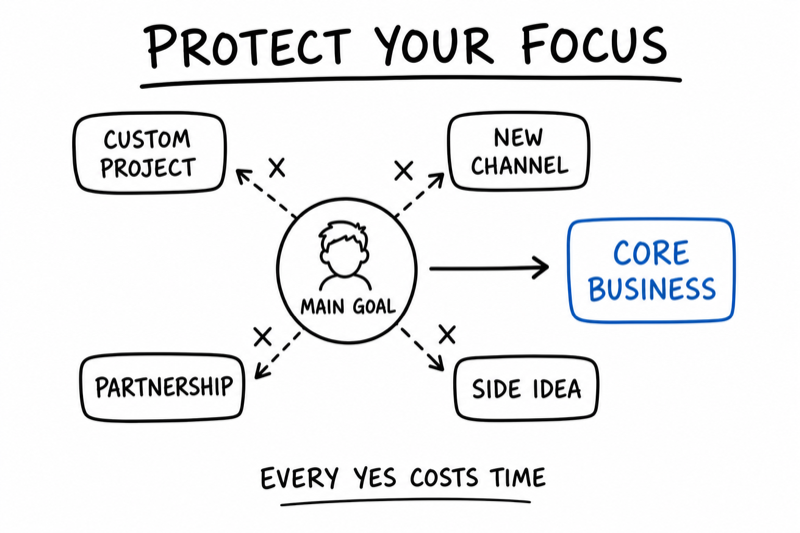
Filter every opportunity by asking: Does this drive revenue? Align with our core? If it's not a "hell yes," say no.
As you grow, opportunities multiply: new products, partnerships, side projects, speaking gigs.
The trap: Saying yes to everything and diluting focus.
Before saying yes to any opportunity, ask:
If the answer isn't "hell yes," it's a no.
Track revenue, profit margin, CAC, LTV, and churn rate monthly—make decisions based on data, not gut feel.
My current numbers:
Revenue: $/month
Profit margin: %
CAC: $
LTV: $
Churn: %
Review these monthly. Make decisions based on data, not gut feel.
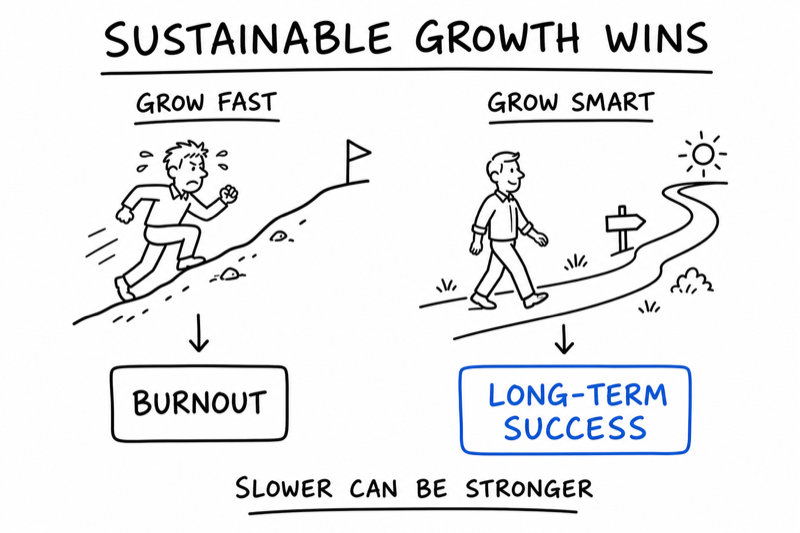
Set boundaries, delegate ruthlessly, build systems you can step away from, and optimize for profit over revenue to avoid burnout.
Choose your path: stay small and profitable, scale aggressively, or build to sell—all three are valid based on the life you want.
You've built systems. You've hired help. You're growing. Now what?
1. Stay Small and Profitable: Keep the business lean. High margins, low stress, more freedom.
2. Scale Aggressively: Hire a team, raise capital, aim for 7-8 figures.
3. Exit Strategy: Build to sell. Maximize systems and recurring revenue for acquisition.
All three are valid. Choose based on the life you want, not what Silicon Valley says success looks like.
You started with an idea. You validated it. You built it. You found customers. And now you're growing.
Most people never get this far.
The next phase is about building a business that can scale without consuming your life. Systems beat hustle. Processes beat talent. Sustainable beats fast.
You have the roadmap. Now execute.
Want the Full Growth Playbook?
The full guide covers systems, hiring, automation, and cash flow — with frameworks and real examples throughout.
→ Read the Full Guide (complete deep-dive with worksheets and examples)
Complete guide series available at StartABusiness.Center
© 2026 StartABusiness.Center | All Rights Reserved
